UK to Ireland Freight Transit Times: What to Expect

You have goods to send. Your buyer in Ireland wants a date. You need to give one. This is where many sellers feel unsure. The sea is short, but the trip is not always quick. Ferries run on timetables. Lorries must stop to rest. Customs can add a day or two. Weather can slow everything down. A good date needs facts, not guesses. This guide gives you the facts. We cover each route, each mode and each delay. You will learn what is normal and what is not. Then you can plan with care and promise only what you can keep.

What Affects Transit Times?

Transit time is the gap between pickup and delivery. It is not just the time on the road. It includes loading, waiting, the ferry, customs and the final drop. Many things shape it. The route matters. So does the size of your load. A full lorry moves faster than a shared one. The day of the week matters too. Goods picked up on Friday may sit until Monday. Peak seasons slow things down. So do storms. For UK to Ireland freight, the sea crossing is only one part of the story. Each step has its own clock. When you know them all, you can build a date you can trust.

Typical Times by Road and Sea

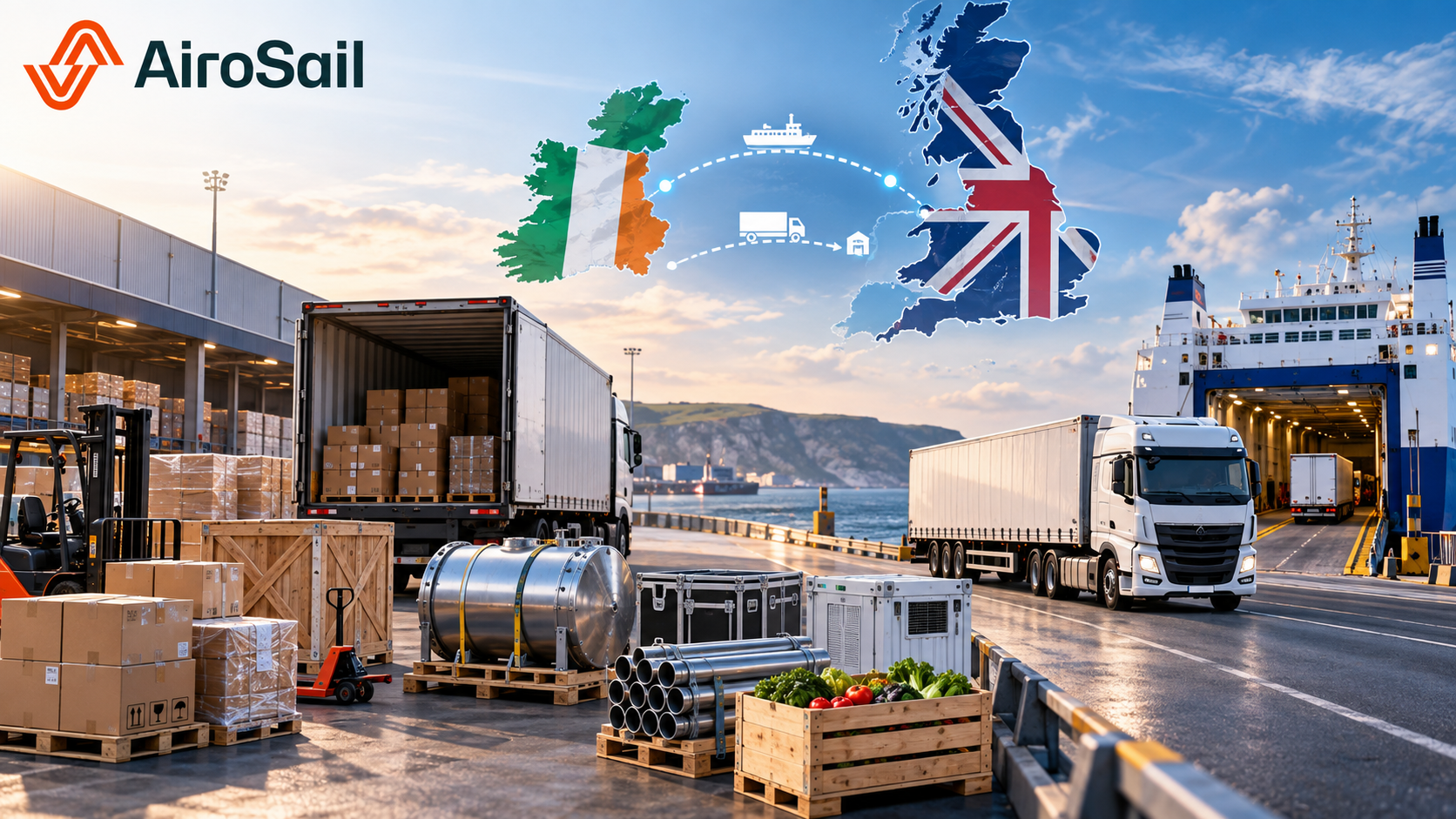
Most goods travel by lorry and ferry. This is the main route for UK to Ireland freight. The crossing time depends on the port you use. Holyhead to Dublin takes about three and a half hours. Fishguard or Pembroke to Rosslare takes about the same. Liverpool to Dublin is a longer night sailing. Cairnryan to Belfast or Larne is much shorter, at around two hours. Add the drive to the port. Then add the drive from the Irish port to the final door. For a full pallet load, delivery in one to three days is common. Shared loads often take two to four days. These are typical times, not promises. Your own job may differ.

Northern Ireland and the Republic of Ireland

These two places are not the same for shipping. Northern Ireland is part of the UK. The Republic of Ireland is in the EU. This changes the paperwork and the pace. Goods sent to Northern Ireland usually move faster. Cairnryan is close to Belfast and Larne. Many loads arrive the next day. Some checks apply under the Windsor Framework, but the route is often smooth. The Republic needs full customs steps. You must clear goods out of Great Britain and into the EU. That can add time. Plan an extra day or two if your papers are not ready. Know which side of the border your buyer is on. It shapes your whole plan.

How Customs Can Add Time

Customs is the most common cause of delay. Goods bound for the Republic must be declared. Officials may check the papers. They may check the goods. If a form is missing, the load waits. If a code is wrong, the load waits longer. A small error can cost days. This is the part many sellers miss. They count the ferry time but forget the paperwork. The fix is simple. Prepare your papers early. Check the codes. Match the invoice to the goods. Then send everything before the lorry leaves. Clean files clear fast. Messy files do not. Good prep is the best way to protect your delivery date.

Air Freight for Urgent Orders

Some orders cannot wait for a ferry. For these, air is an option. Flights between the UK and Ireland are short. The air leg takes about an hour. Total delivery can be as quick as the next day. This suits urgent parts, medical items and high-value goods. It is also useful when a sea route is blocked by storms. But air costs more. It also has limits on size and weight. Some goods, such as chemicals, need special approval. Customs still applies, so papers must be ready. For most loads, road and sea give the best mix of cost and speed. Air is the backup when time matters most.

Why Groupage Takes Longer

Not every load fills a lorry. Many sellers send a few pallets or boxes. These often travel as groupage. This means your goods share space with other loads. It saves money. But it can take longer. The lorry may need to collect from several sites. It may drop off at several more. Each stop adds time. Some groupage services run only on set days. If you miss the cut-off, you wait for the next one. Full loads go direct. They cost more, but they move faster. Ask yourself what matters most. If cost is key, groupage works well. If time is key, a dedicated load is safer.

Seasonal Delays and Weather

The Irish Sea can be rough. High winds can cancel or delay sailings. Winter storms are the main cause. When a ferry is cancelled, lorries queue at the port. It can take a day or more to clear the backlog. Busy periods add to the strain. Christmas, the summer peak and the weeks before big sales all slow things down. Space on ferries fills up. Prices rise. Deadlines become tighter. You can reduce the pain with early booking. Ship before the rush, not during it. Leave a little spare time in your plan. A buffer of one extra day can save a lot of stress and many unhappy emails.

How to Get Faster Delivery

You cannot control the sea. But you can control much of the rest. Start with your papers. Get them right the first time. Pack goods well so they pass checks and arrive intact. Book early, especially in peak months. Pick the right port for your route. Choose a dedicated load if speed is vital. Share clear contact details for pickup and drop-off. Make sure someone is there to receive the goods. A missed delivery can add days. Ask for tracking so you can spot trouble early. Small steps like these add up. Together, they can turn a slow job into a smooth one.

How UK Freight Forwarding Companies Help

Planning all this takes time. Many sellers do not have it. This is where UK freight forwarding companies step in. They book the space. They pick the best route. They prepare customs papers. They watch the load from start to end. They also know the ports and the carriers. They know which routes run well in which season. When a ferry is cancelled, they find another way. Strong UK freight forwarding companies do not just move goods. They give you a clear date and the means to keep it. For firms with busy schedules, this help is worth far more than it costs. It frees you to focus on your own work.

How Airo Sail Ltd Supports Your Deliveries

Airo Sail Ltd helps businesses move goods between Britain and Ireland with less stress. The team starts by learning what you ship and when it must arrive. Then they plan the route, the paperwork, and the timing. They explain each step in plain words. You know what to expect before the lorry leaves. They also stay in touch during the trip. If a delay appears, they tell you at once and act fast. The aim is a fair date that you can share with your buyer and trust. Whether you send one pallet or many, Airo Sail Ltd gives your goods the same care and attention.

Conclusion

Transit times for UK to Ireland freight are short on paper. In real life, many things can change them. The route, the load size, customs and weather all play a part. Northern Ireland is often quicker than the Republic. Full loads move faster than shared ones. Air is fastest, but costs more. Good paperwork and early booking save the most time. Reliable UK freight depends on planning, not luck. Skilled UK freight forwarding companies can handle the details for you and keep your dates firm. A partner such as Airo Sail Ltd can guide your goods from door to door. Plan early, ask clear questions and ship with confidence.

UK to Ireland Freight Documents Checklist: What You Need Before You Ship

Sending goods to Ireland used to be easy. Now there are forms to fill. There are codes to find. There are rules to follow. One missing paper can stop a lorry at the port. That costs time and money. Your buyer waits. Your goods sit in a queue. The good news is simple. Most delays are easy to prevent. You just need the right papers, ready at the right time. This guide shows you what to prepare. Use it as a checklist before every shipment.

Why Paperwork Matters More Than Ever

Since Brexit, trade between Great Britain and Ireland has changed. Goods now cross a customs border. Officials want to know what is in each load. They want to know its value, its origin and its weight. If your papers are clear, your goods move fast. If they are not, your goods stop. Many firms learn this the hard way. A small error can mean a fine. It can mean a long wait at the port. For anyone who ships UK to Ireland freight, good paperwork is not optional. It is the key to a smooth trip. Treat it as part of the job, not an afterthought.

Get an EORI Number First

An EORI number is your trader ID. It is a must for customs. You need one to export goods from Great Britain. Your buyer in Ireland needs an EU version to import them. Without it, your goods cannot clear. The UK number starts with GB. It is free to apply for through HMRC. The process is quick for most firms. Do this first, before anything else. Many shippers forget this step until the last minute. Then they lose days. Check that your number is active. Check that it is correct on every form. A typo can cause a rejection. If you use a forwarder, they will ask for it on day one.

The Commercial Invoice

The commercial invoice is the heart of your file. It tells customs what you sell and what it is worth. It must be clear and complete. Include the seller and buyer names and addresses. List each item with a plain description. Add the quantity, the unit price and the total value. State the currency. Show the date and the invoice number. Add the Incoterms, such as DAP or EXW. These say who pays for what. Include the EORI numbers of both parties. Vague words like “parts” or “gifts” cause trouble. Be exact. A good invoice also helps with tax. It sets the base for duty and VAT. Errors here can lead to extra charges.

The Packing List

The packing list is a simple record of what is in each box. It does not show prices. It shows contents, weights and sizes. List the number of packages. Note the gross and net weight of each. Add the type of pack, such as pallet, crate or carton. Include marks and numbers so each item can be matched to the load. Customs may open a box to check. A clear list makes this quick. It also helps the driver, the port and your buyer. If a package goes missing, the list helps you prove what was inside. It is a small document with a big job. Keep it neat and match it to the invoice.

Commodity Codes and Origin Proof

Every product has a commodity code. This is a number that tells customs what the item is. It sets the duty rate and the rules that apply. The wrong code can mean the wrong tax. It can also mean a delay or a fine. Use the official UK Trade Tariff to find the right one. If you are unsure, ask an expert. Next comes origin. Goods made in the UK may qualify for zero duty under the trade deal with the EU. But you must prove where they were made. This is done with a statement on origin on your invoice. Keep your records. You may need them later if officials ask.

Export and Import Declarations

Goods leaving Great Britain need an export declaration. This tells HMRC what is leaving. It is filed through the customs system. You will get an export movement reference number. The driver needs it at the port. On the Irish side, an import declaration is also needed. It is filed with Irish Revenue. It sets out the duty and VAT due. Someone must file both. Your buyer may do this. A broker or forwarder can do it for you. Make sure you agree who does what before the goods move. Do not assume. Many delays come from two sides each thinking the other has it covered.

Transport Documents

Your goods also need a transport document. For road freight, this is usually a CMR note. It shows the sender, the carrier and the receiver. It lists the goods and the route. It acts as proof of the contract. For sea freight, you will need a bill of lading. This is a key document. It names the goods and the ship. It can also show who owns them. For air freight, it is an air waybill. Each type has its own rules. Check the details carefully. A wrong name or address can hold up delivery. The driver must carry the right papers at all times. Without them, the load may not board the ferry.

Special Goods and Extra Certificates

Some goods need more than the standard set. Food, plants and animal products face strict checks. They may need health certificates. They may need a vet or plant inspector to sign off. Chemicals and dangerous goods need special labels and safety sheets. They may need ADR papers for road transport. High-tech items may need export licences. Alcohol and tobacco bring excise rules. Valuable or temporary goods may need an ATA carnet. This is a passport for goods that will return. Check early if your cargo falls into any of these groups. These papers take time to get. You cannot rush them on the day.

Safety and Security Data

Goods entering the EU must also meet safety and security rules. This means data must be sent ahead of arrival. It includes details about the sender, the buyer and the goods. The carrier often files this. But they need your data to do it. Give it early and give it right. Late or poor data can cause the load to be held. Ask your carrier what they need and by when. This step is often missed. It is quiet and technical. Yet it can stop a shipment cold. Build it into your checklist, so it never slips.

How Airo Sail Ltd Can Help

Airo Sail Ltd helps you get your papers right the first time. The team checks your invoices, codes and forms before the goods move. They explain each step in plain words. They also handle customs entries and book the right transport. If something looks wrong, they tell you early. That saves you from delays at the port. Whether you ship a single pallet or a full load, the aim is the same. Your goods should arrive on time, with no surprises. With Airo Sail Ltd, you can focus on your business while they deal with the forms.

Why Use Specialist Help

You can do all this yourself. But it takes time and skill. Rules change often. A small shift in a form can catch you out. This is why many firms turn to UK freight forwarding companies. They know the rules and keep up with changes. They have links with carriers and brokers. They can spot an error before it costs you money. They also offer tracking and support if a problem arises. For busy firms, this is a smart choice. It frees your team to do what they do best. Good help costs less than a delayed load.

Your Quick Pre-Shipping Checklist

Before each shipment, run through this list. Do you have a valid EORI number? Is the commercial invoice complete? Is the packing list ready? Are the commodity codes right? Do you have proof of origin? Is the export declaration filed? Who files the import declaration? Is the transport document correct? Do you need any special certificates? Has the safety data been sent? If you can say yes to each, you are ready. If not, fix the gaps now. It is far easier to do before the lorry leaves.

Conclusion

Paperwork may seem dull. But it decides whether your goods move or stall. Get an EORI number. Prepare a clear invoice and packing list. Use the right codes. Prove your origin. File the right declarations. Add the right transport papers and any special certificates. Do this, and your cargo will cross the border with ease. If the task feels heavy, ask for help. Expert UK freight partners can lift the load. A trusted name such as Airo Sail Ltd can guide every step, from first form to final delivery. Plan early, check twice and ship with confidence.

Road, Rail or Sea: Which European Freight Forwarding Option Is Best?

You have goods to move. They must reach a buyer in Europe. The clock is ticking. Your first big choice is how to send them. Will it be road, rail or sea? Each one has strengths. Each one has limits. The wrong pick can cost you time and money. It can also upset your customers. The right pick can do the opposite. It can save cash and keep your promises. This guide breaks down the three options in plain words. You will see how they differ. You will also learn how to pick the best fit for your cargo and budget.

Why Your Choice of Transport Matters

Moving goods is not just about getting from A to B. It shapes your costs, your speed and your risk. A fast route may be dear. A cheap route may be slow. A slow route may tie up your stock for weeks. That hurts cash flow. It can also leave your shelves bare. Good European freight forwarding starts with a clear match between your goods and the route. Think about what you ship, how much, and how soon it must arrive. A pallet of fresh food has different needs than a crate of steel parts. Once you know your priorities, the choice gets much easier.

Road Freight: Fast, Flexible and Direct

Road is the most used option in Europe. It is also the easiest to understand. A lorry collects your goods from your door. It drives them to the buyer’s door. There is no need to change vehicles on the way. That means less handling and less risk of damage. Road is also quick for short and medium trips. A load can leave the UK and reach France, Germany or Spain in a few days. You can ship a single pallet or a full trailer. Prices are fair for most loads. Road also gives you great control. You can change a pickup time or add a stop with little fuss. The downsides are clear too. Traffic, border queues and driver rules can cause delays. Fuel costs rise and fall. Still, for most European freight services, road is the first choice.

Rail Freight: Steady, Green and Good for Bulk

Rail is less common for UK firms, but it is growing. Trains run on fixed times. They are not stuck in traffic. They carry large loads over long distances. This makes them ideal for heavy goods such as metals, cars and bulk materials. Rail is also kinder to the planet. A train gives off far less carbon per tonne than a lorry. That matters to many buyers today. Some firms must report their emissions. Rail can help them meet those goals. There are limits, though. Trains only run between set terminals. Your goods may need a lorry at each end. That adds steps and cost. Rail also suits large, regular loads best. If you ship small, one-off parcels, it may not fit. But for the right cargo, rail is a strong and steady choice.

Sea Freight: Low Cost for Big Loads

Sea is the cheapest way to move large amounts of cargo. Ships carry thousands of containers at once. That keeps the cost per item low. For the UK, short sea routes link ports like Felixstowe, Tilbury and Southampton with Rotterdam, Antwerp and Hamburg. They suit goods that are heavy, bulky or not in a rush. Sea is also good for routes to places such as Ireland, Scandinavia and the Mediterranean, where road trips would be long. The trade-off is time. Ships keep to sailing dates. If you miss one, you wait. Port delays and bad weather can also slow things down. You need to plan. Your goods must reach the port early. They must also clear customs on both sides. Sea is not for urgent orders, but it saves a lot on bulk freight.

Comparing Speed, Cost and Risk

Let us look at the three side by side. Road wins on speed for short trips and on door-to-door ease. Rail wins on green credentials and on heavy loads over long distances. Sea wins on price for large volumes. Each has a weak spot too. Road can face jams and border waits. Rail has fewer routes and set timetables. Sea is slow and tied to sailing dates. Risk also differs. Road involves fewer touchpoints, so damage is less likely. Sea and rail often involve more lifts and transfers. That can raise the chance of harm. None of these options is best for everyone. The best choice depends on your goods, your deadline and your budget.

When a Mix of Modes Works Best

You do not have to pick only one. Many shipments use more than one mode. This is called multimodal transport. For example, your goods might go by lorry to a UK port. Then they cross the sea. Then another lorry takes them the last leg. Or a container might travel by rail across Europe and finish by road. A mix can cut costs while keeping delivery times fair. It can also lower emissions. Planning such a route takes skill. The handovers must be smooth. The timing must line up. The papers must be right at every stage. This is where an expert partner helps most. They link each step so your cargo flows without gaps.

Customs and Paperwork Across Every Mode

No matter which route you pick, customs rules apply. Since Brexit, goods moving between the UK and the EU face checks. You need correct invoices, tariff codes and export forms. Some goods need licences or special permits. A small error can hold up your cargo for days. This is true for road, rail and sea alike. Sea freight may add port fees. Rail may need extra rail documents. Road may require transit papers. Many firms find this part the hardest. A skilled forwarder checks your papers before the goods leave. They file entries on time. They also keep you up to date on rule changes. Clean paperwork keeps your cargo moving, whatever the mode.

How Airo Sail Ltd Helps You Choose

Airo Sail Ltd helps you pick the right route for every job. The team starts by asking questions. What are you shipping? How heavy is it? When must it arrive? What is your budget? Then they compare road, rail and sea for your needs. They explain the trade-offs in simple terms. You see the cost and the time for each choice. They also handle the paperwork and keep you updated along the way. If plans change, they adjust fast. Whether you send a single pallet or a full container, the aim is the same. Your goods should arrive safe, on time and at a fair price. With Airo Sail Ltd, you get clear advice and calm support.

How to Pick the Best Partner

Choosing the right route is only half the job. You also need the right partner. Look for firms with real experience in Europe. Ask which routes they run most often. Check that they hold the right licences. Request a full quote with each charge listed. Ask how they track goods and how fast they reply to questions. Read reviews and ask for references. Strong international freight forwarding companies are open about costs and risks. They give plain answers. They do not hide behind jargon. If a firm is vague now, it will be vague when trouble strikes. Pick a team that is clear, quick and easy to reach.

Conclusion

So, which is best: road, rail or sea? The honest answer is that it depends. Road is fast and flexible. Rail is steady and green. Sea is cheap for big loads. Often, a mix of the three gives the best result. The key is to match the route to your goods, your deadline and your budget. Good European freight forwarding makes that match easy. Reliable European freight services keep your cargo moving smoothly across borders. And the best international freight forwarding companies guide you at every step. A team such as Airo Sail Ltd can help you plan the right route and ship with confidence. Start with your goals. Choose the mode that fits. Then let the experts do the heavy lifting.

Inside International Freight Forwarding Companies: How a Shipment Moves Door to Door

You pack your goods. A lorry arrives. A few days later, a buyer in another country opens the box. It looks simple from the outside. It is not. Between those two moments, your cargo passes through many hands. Forms are filed. Fees are paid. Rules are checked. Each step must happen in the right order. One slip can cause a long delay. Let us walk through the whole trip, step by step. You will see what happens behind the scenes and where the real work lies.

Step One: The Quote and the Plan

Every shipment begins with a question. What are you sending, and where does it need to go? You share the size, weight, value and deadline. The forwarder then builds a plan. They pick the best mode of transport. They check the route and the likely costs. They also look for risks, such as banned items or busy ports. Then they send you a quote. A good quote lists every charge. It should have no hidden extras. Many international freight forwarding services start here, because a clear plan saves money later. Ask questions at this stage. Make sure you know what is included and what is not. A few minutes now can prevent a costly shock down the line.

Step Two: Collection from Your Door

Once you accept the quote, the forwarder books a pickup. A driver arrives at your site at a set time. They check the goods against the paperwork. They count the boxes and look for damage. They load the cargo with care and secure it for the road. If you ship a small parcel, it may join a shared load. If you ship a large order, it may get a full lorry. Either way, the driver gives you a receipt. This is proof that the goods left your hands in good order. It matters if a claim is needed later. Good pickup service sets the tone for the whole trip.

Step Three: Packing, Labels and Documents

Before the cargo crosses a border, it must be ready. Packing must suit the route. A sea trip is rough. An air trip has strict weight limits. Fragile items need padding. Heavy goods need strong pallets. Labels must be clear and correct. Next come the documents. These usually include a commercial invoice, a packing list and a transport document. Some goods need extra papers, such as licences or health certificates. Every detail must match. A wrong weight or a vague description can raise flags. Leading international freight forwarding companies check all of this before the cargo moves. They fix errors early, when they are cheap and easy to correct.

Step Four: Export Customs Clearance

Next, the goods must leave your country legally. This is called export clearance. The forwarder files a declaration with customs. It lists what you ship, what it is worth and where it is going. Each product has a tariff code. The right code matters, because it affects duty and checks. Officials may review the file. They may inspect the cargo. Once they approve, the goods are free to go. Many sellers dread this step. Rules are complex, and they change often. A forwarder handles it daily. They know what officials expect. That knowledge keeps your cargo moving and keeps you safe from fines.

Step Five: The Main Journey

Now the long part begins. The cargo travels by air, sea, road or rail. Each mode has its own rhythm. Air is quick but costs more. Sea is cheaper but slower. Road works well across Europe. Rail links some routes between Europe and Asia. Often the trip uses more than one mode. Goods might go by lorry to a port, then by ship, then by lorry again. The forwarder books space on each leg and keeps them in sync. If a ship runs late, they adjust the next step. This is where their carrier ties pay off. They can find space when others cannot, even in a busy season.

Step Six: Ports, Hubs and Transit Stops

Along the way, cargo often stops at ports, airports or depots. Here it may be unloaded, sorted and stored. Containers are checked and stacked. Pallets may be split or joined with others. Goods can wait a few hours or a few days. This is a risky phase, because every move adds a chance of harm. Safe storage and careful handling are vital. Good forwarders use trusted terminals with strong security. They also watch for delays caused by storms, strikes or crowding. If a problem appears, they look for a fix. That may mean a new route or a different carrier. The aim is to keep your goods moving.

Step Seven: Import Customs at the Destination

When the cargo reaches the destination country, it must clear customs again. This is import clearance. The papers are checked once more. Duty and tax must be paid. Officials may ask for extra details. They may also inspect the load. If anything is missing, the goods can be held. Storage fees then start to build. This is where many shipments get stuck. A forwarder with a strong overseas agent can solve problems fast. The agent knows the local rules and the local staff. Many freight companies UK businesses use such partners because a good link at the far end matters as much as a good start at home.

Step Eight: The Final Leg to the Door

Once customs releases the goods, the last stage begins. A local carrier collects the cargo from the port or hub. They deliver it to the buyer’s address. The buyer or a staff member signs for it. A good forwarder books a time slot, so no one is left waiting. They also check for access issues, such as narrow roads or loading rules. Large items may need a tail-lift or extra hands. After delivery, the driver collects proof of delivery. This closes the loop. It confirms that the goods arrived as planned. For you, it marks the end of the trip and the start of payment.

Tracking and Updates Along the Way

Throughout the trip, you should never be left in the dark. Modern forwarders give you tracking tools. You can see when the goods are collected, when they sail and when they clear customs. Alerts tell you when something changes. But data alone is not enough. You also need a person to call. When a delay happens, a real contact can explain why and offer a fix. This mix of tech and human care keeps stress low. It also lets you update your own customers with confidence. Good news and bad news both arrive early. That gives you time to act.

How Airo Sail Ltd Manages the Journey

Airo Sail Ltd looks after each stage of the trip, from pickup to delivery. The team begins by learning about your goods and your needs. They then plan the route, prepare the papers and book the carriers. They handle customs on both sides. They also keep you posted at each step. If a problem arises, they act quickly and explain the options in plain words. Whether you send one pallet or many containers, your cargo gets the same care. The aim is simple. Your goods should arrive safe, on time and at a fair price. With Airo Sail Ltd, you have one partner for the whole journey.

What You Can Do to Help

A smooth trip is a team effort. You can help by giving full and correct details. Describe your goods clearly. State the true value. Share the delivery address and a contact number. Pack well and label every box. Send documents early. Tell your forwarder about any special needs, such as cold storage or tight deadlines. Ask for updates when you need them. The more your forwarder knows, the better they can plan. Small acts on your side can save days on the road. They also lower the chance of extra fees.

Conclusion

A door-to-door shipment is more than a ride. It is a chain of linked tasks. There is a quote, a pickup, packing, paperwork and export clearance. Then comes the main journey: a stop at transit hubs, import clearance and final delivery. Each link must hold. If one breaks, the whole chain suffers. International freight forwarding services tie these links together, so you do not have to. The best international freight forwarding companies act as true partners. They plan, track and solve problems before they grow. If you ship from Britain, choose trusted freight companies UK with a proven record. A team such as Airo Sail Ltd can guide your cargo from your door to your buyer’s door. Plan early, choose well and ship with confidence.

How International Freight Forwarding Companies Handle Customs and Paperwork

Every parcel that crosses a border meets a rule book. Officials want to know what is inside. They want to know its value, its source and its end use. They want it all on paper. Get one detail wrong, and your goods can sit for days. You may also face fines. Many firms dread this part of shipping. It feels slow and full of traps. But it does not have to be that way. Skilled partners deal with this work every day. In this post, we show how they do it. We cover forms, codes, duties, checks and more. Let us begin.

Why Customs and Paperwork Matter

Customs is the gatekeeper of trade. It collects taxes. It stops banned goods. It keeps data on what moves in and out. Each country sets its own rules. These rules also change often. A form that worked last year may be out of date today. When papers are wrong, the cost is high. Goods may be held at the port. Storage fees add up fast. Buyers grow angry as dates slip. In bad cases, goods are seized or sent back. Paperwork may seem dull. Yet it decides whether your cargo moves or stops. That is why so many sellers hand this task to experts. They would rather ship than fill in forms all day.

The Core Documents Every Shipment Needs

Most shipments need a set of key papers. The commercial invoice states what you sell, to whom and for how much. The packing list shows what is in each box, with weights and sizes. A bill of lading or air waybill is the contract with the carrier. It also acts as a receipt. Some goods need a certificate of origin. This shows where they were made. Others need licences, permits or safety papers. Each paper must match the others. If the invoice says ten boxes and the list says nine, officials will ask why. International freight forwarding services prepare and check this full set before the goods move. They spot gaps early. A small fix at your desk is far cheaper than a fix at the border.

Tariff Codes and Correct Classification

Every product has a code. It is called a commodity code or HS code. Customs uses it to set duty rates and apply rules. Picking the wrong code is a common error. It can lead to too much duty or too little. Too little may bring a fine later. Too much wastes your money. Codes can be hard to pick. A cotton shirt and a cotton shirt with a lining may fall under different codes. Small details change the answer. A forwarder has deep knowledge here. They study your goods and match them to the right code. They keep records of past choices. This makes future shipments faster. It also keeps you safe if officials ask questions months later.

Duties, Taxes and Valuation

Duty is a tax on goods that enter a country. VAT may apply as well. The amount depends on the code, the origin and the value. Many sellers are unsure how to work it out. They may forget freight and insurance costs, which often count toward the value. That mistake leads to errors in the final bill. The best international freight forwarding companies explain these costs up front. They help you work out what you will owe. They also advise on terms of sale, known as Incoterms. These set who pays for what and when. Clear terms avoid fights with buyers. Some forwarders also help with duty relief schemes. These can cut costs for firms that re-export goods or use parts in making products.

Filing Export and Import Declarations

A declaration is a formal statement to customs. It lists the goods, their value and their route. For exports, you file in the country you leave. For imports, you file in the country you enter. Both must be accurate and on time. Many nations use online systems. These can be tricky. Data must be in the right format. Errors may bring rejection. A forwarder files these for you. They hold the right access and know the systems well. In the UK, many firms use a customs agent link to make this smooth. Your forwarder can act on your behalf with proper approval. They also track the status of each filing. If officials ask for more data, they reply at once. This keeps your goods moving.

Dealing with Post-Brexit Rules

Since Brexit, trade between Britain and the EU has changed. More checks now apply. Goods need export and import entries. Rules of origin matter a great deal. Some food and plant products need health papers. Northern Ireland has its own set of rules. Many UK sellers found this a shock. Costs rose, and delays grew. Trusted freight companies UK firms have built great skill in this area. They know the UK system and the EU side. They help you claim lower duty when you meet origin rules. They also advise on VAT and the right papers for each route. If you trade with Europe, this help is very useful. The rules are complex, and mistakes are costly.

Licences, Permits and Restricted Goods

Some goods need special approval. Food, plants, animals, drugs and chemicals are common examples. So are goods with both civil and military use, often called dual-use items. Some products face bans in certain places. Shipping them without a licence is a serious breach. Penalties can be harsh. A forwarder checks your goods against the rules of each country. They tell you if a permit is needed. They help you apply and keep the papers ready. They also screen for sanctions. This protects you from trading with banned parties or places. Many firms do not know that sanctions checks are part of their duty. A good partner raises these issues early, long before the goods leave your site.

Using Technology to Cut Errors

Modern forwarders use digital tools to reduce risk. Software can check data for gaps and mismatches. It can store your product codes and reuse them. It can send papers to customs in seconds. It also keeps a clear record of every step. This helps if you face an audit. Digital systems cut the need to retype data, and typing errors are a top cause of delay. They also allow you to see the status of each shipment online. Yet tools alone are not enough. A system cannot judge a tricky case. That needs a trained person. The best teams mix both. Software handles the routine work. Experts handle the hard calls.

How Airo Sail Ltd Simplifies Customs

Airo Sail Ltd takes the stress out of customs work. The team begins by learning about your goods and your route. They check what papers you need. They help you pick the right codes and terms. They prepare the forms and file them on time. If officials ask a question, they reply fast. They also keep you informed in plain words. You never have to guess what is happening. This care helps your cargo clear borders with fewer delays. Whether you ship once a month or every day, you get the same steady support. With Airo Sail Ltd, paperwork becomes a quiet part of the job, not a daily worry.

How to Choose a Forwarder for Customs Support

Not every forwarder offers the same level of help. Ask a few key questions before you decide. Do they have in-house customs staff? Which countries and routes do they know well? How do they check codes and values? Do they offer sanctions screening? What is their record on clearance times? Ask for a full quote with all fees shown. Check for licences and trade body memberships. Read reviews and ask for references. Notice how they reply. Clear, direct answers are a good sign. Vague answers are not. A strong partner will be open about risks and show you how they manage them.

Conclusion

Customs and paperwork can slow any shipment. Wrong codes, missing forms and changing rules cause many delays. Yet you do not have to face them alone. International freight forwarding services bring skill and order to this task. They prepare documents, pick codes, file declarations and manage duties. The best international freight forwarding companies also guide you through licences, sanctions and post-Brexit checks. If you ship from Britain, choose from reliable freight companies in the UK with a strong record. A team such as Airo Sail Ltd can handle the forms while you focus on your business. Plan early, keep records clean and ship with confidence.

How European Freight Services Handle Time-Critical Deliveries

Some loads cannot wait. A part for a stopped line. Medicine for a ward. Stock for a big sale. When time runs out, the cost of delay grows fast. A late van can halt a factory. A missed slot can cost a contract. These jobs need more than a fast truck. They need a plan, a team and sharp control from start to end. This post shows how it works. We cover booking, routes, drivers, customs and tracking. We also show what to ask before you book. Let us look at what makes a delivery time-critical. Then we see how to get it there on time.

What Makes a Delivery Time-Critical?

A time-critical load has a hard deadline. Miss it, and you pay. The cost may be money, trust or both. Car makers run on just-in-time supply. They hold little stock. If a part is late, the line stops. Shops need goods before a sale or a holiday. Hospitals need drugs and kit on set days. Event firms need staging in place before the doors open. In each case, the goods are not the only thing that matters. The clock matters just as much. A normal service may be cheap, but it often has slack in it. Time-critical work removes the slack. It trades low cost for high control. Knowing which of your loads fall into this group is the first step.

Fast Booking and Smart Planning

Speed starts before the wheels turn. The best European freight services act within minutes of your call. They ask a few key questions. What is the load? How big is it? Where must it go? By when? Then they plan the job. They check which vehicles are free. They look at the route and the time of day. They book the driver and the slot. A good team has these answers ready. They do not wait for a reply from ten suppliers. They use trusted partners they have worked with for years. This cuts the lag between your request and the pickup. Often the van is on the road the same day. Clear details from you help. The more you share, the faster they can move.

Choosing the Right Route and Mode

Not every fast job goes by the same path. Road is the best fit for many trips across Europe. It is direct and flexible. A lorry or van can go from door to door with no change. For short or mid-range trips, road is often the fastest option. For long hauls, other modes may win. Air is quick but costs more. Rail can be steady on some lanes. Sea works if the route is short and the ferry times line up. Some jobs use a mix. A load may fly part of the way, then go by van. A skilled European freight forwarding team weighs time, cost and risk. Then it picks the plan that meets your deadline. The cheapest route is rarely the right one here.

Dedicated Vehicles and Express Services

Shared loads save money. But they also add stops and waiting. Your goods may sit while the truck fills up. For urgent jobs, this is a poor fit. Dedicated vehicles solve the problem. Your goods travel alone. The van goes straight to the drop-off. There are no side trips and no transfers. This is often called an express or exclusive service. It is the fastest road option. For small, urgent parcels, a courier on a fast-track service can work well. Larger loads may need a full lorry booked for you alone. Some jobs even use two drivers. They take turns at the wheel, so the vehicle keeps moving. Rules on driving hours still apply. A good provider plans around them. Safety and speed must go hand in hand.

Customs and Border Planning

Borders can undo all your good work. A van that arrives at the border with the wrong papers will wait. Waiting costs time you do not have. Since Brexit, trips between the UK and the EU involve more checks. Goods need the right codes, values and forms. Some need licences or special entries. Mistakes can mean long holds and fines. Time-critical shipping needs clean paperwork from day one. A strong team sends data to customs before the load arrives. They check each form twice. They know which crossings run fastest. They also know the quiet hours at busy ports. Many firms that offer international freight forwarding services keep customs experts on staff. These people solve problems on the spot. That can save hours, or even days, at the border.

Real-Time Tracking and Active Control

You cannot fix what you cannot see. During a rush job, you need live news. Good providers give you GPS tracking. You see where the vehicle is and when it will arrive. You also get alerts if the plan changes. But tools alone are not enough. A skilled controller watches each job. They check progress through the day. They call the driver if the van runs late. They spot trouble early, such as a crash or a jam. Then they act. They may change the route. They may send a second vehicle. They may warn the receiver so staff are ready. This active control is what sets an urgent service apart. It turns a risky trip into a managed one.

Backup Plans for When Things Go Wrong

Even the best plan can fail. A van may break down. Snow may close a road. A strike may block a port. Time-critical work needs a plan B. Good teams build one in from the start. They keep spare drivers and vehicles on call. They know alternate routes. They hold links with partners across the continent. If a truck fails in Germany, they can send help from a nearby depot. If a ferry is cancelled, they can switch to another crossing. They also keep you in the loop. You hear the bad news at once, along with the fix. This is what you pay for. Anyone can deliver when all goes well. The real test is what happens when it does not.

How Airo Sail Ltd Handles Urgent Loads

Airo Sail Ltd knows that a late load can hurt your business. The team treats urgent jobs with focus. They start by asking the right questions. They learn your deadline, your goods and your needs. Then they pick the best vehicle, route and plan. They handle the paperwork and the border. They watch the load from pickup to drop-off. If a problem appears, they act fast and keep you informed. Their aim is simple. Your goods should arrive when you need them, in good shape and at a fair price. With Airo Sail Ltd, you get a partner who respects your deadline as much as you do.

Questions to Ask Before You Book

Not every provider can handle a rush. Ask before you commit. Can they collect the same day? Do they offer dedicated vehicles? Who watches the load while it moves? What is their plan if the van breaks down? How do they handle customs? Do they work seven days a week? Ask for a clear quote with all costs listed. Urgent work often carries extra fees, so check what is included. Pay close attention to how they answer. Fast, clear replies are a good sign. Vague or slow replies are a warning. If they are slow to answer a question, they may be slow to deliver your load.

Conclusion

Time-critical deliveries leave little room for error. A late load can stop a factory, spoil a sale or harm a customer. Yet with the right help, you can meet even tight deadlines. Strong European freight services combine fast booking, smart routes and dedicated vehicles. They plan for borders, track every mile and keep a backup ready. Skilled European freight forwarding teams bring order to a hard job. Providers of international freight forwarding services add customs expertise and wide networks. A partner such as Airo Sail Ltd can bring all of this together for you. Plan early, share clear details and choose a team you trust. Then your urgent goods will arrive on time.

How European Freight Forwarding Helps E-commerce Brands Grow

Online shoppers want fast delivery. They want low prices. They want easy returns. Most of all, they want their order to turn up on time. A brand that gets this right wins repeat buyers. A brand that gets it wrong loses them fast. Selling abroad is a big chance to grow. Europe sits right on the UK’s doorstep. It holds millions of eager buyers. But shipping there is not as simple as it was. Rules have changed. Costs have moved. This post shows how the right support can turn Europe into your best market.

Why Europe Is a Smart Market for Online Brands

Europe is close, large and rich in buyers. Many shoppers there love to buy from British brands. They trust UK quality and style. The distance is short too. A parcel can reach Paris, Berlin or Madrid in a few days by road. That is far quicker than a trip to Asia or America. Short trips mean lower costs and less risk. They also mean happy customers. Fast delivery boosts reviews and sales. Many online brands start with the UK and then look abroad. Europe is often the best first step. It lets you test new demand without huge cost. With good planning, one small test can grow into a steady flow of orders.

What European Freight Forwarding Really Means

A forwarder plans and manages your cargo from start to end. They book the lorry, van or container space. They prepare the papers. They deal with customs. They track the goods until they land. Good European freight forwarding does all of this in one place. You do not need to juggle many firms. You deal with one team. That team knows the routes, the rules and the costs. For an online brand, this is a big help. You have enough to do already. You must source stock, run ads and reply to buyers. Shipping should not eat your whole day. A forwarder takes that load off your desk.

Faster Delivery Wins Customers

Speed is a key part of online selling. Shoppers compare brands in seconds. If one shop says three days and another says ten, the choice is easy. Reliable European freight services help you promise short delivery times and keep them. Road freight is the star here. Lorries leave daily for most big cities. Ferries and the Channel Tunnel carry them across fast. Some forwarders also run groupage routes. These move many small loads on one lorry on a fixed schedule. You get speed without paying for a full truck. Fast and steady delivery builds trust. Trust brings repeat orders. Repeat orders are the cheapest way to grow.

Smarter Costs Protect Your Profit

Online margins can be thin. Shipping costs can wipe out your gain in a flash. Many brands lose money on cross-border orders because they do not see the full cost. They forget duty, fees and fuel charges. A good forwarder gives you a clear quote. Each charge is listed. There are no hidden extras. They also help you pick the cheapest way that still meets your deadline. Sharing space on a lorry cuts the price per parcel. Sending stock in bulk is cheaper than posting single orders. You send a pallet to a hub in Europe. Then local couriers deliver to each buyer. This lowers cost and speeds up delivery. Your profit grows with every order.

Handling Customs After Brexit

Since Brexit, goods moving between the UK and the EU face checks. You need the right forms. You need correct codes and values. You may need to pay VAT and duty. Many small brands find this stressful. A tiny error can hold up a parcel at the border. Buyers then wait and complain. Some even ask for a refund. Skilled international freight forwarding companies deal with this daily. They know which papers each country needs. They file entries on your behalf. They check your data before the goods leave. This cuts delays and fines. It also gives you peace of mind. You can sell to Europe with less worry and more confidence.

Smooth Returns Keep Buyers Happy

Returns are a fact of online life. Fashion brands see them most. Shoppers like to know they can send an item back. A hard return policy puts them off. Cross-border returns are tricky, though. Goods must clear customs again. Costs can climb. Without a plan, returns pile up and eat your profit. A forwarder can set up a return route. Items may go to a hub in Europe first. They are checked, then restocked or sent home in one batch. This is cheaper than many single returns. It also gives buyers a simple, local way to send goods back. Easy returns build trust. Trust lifts sales.

Stock Planning and Warehousing in Europe

As orders grow, you may want stock closer to your buyers. Many forwarders offer storage near ports and hubs. You send a large load in one go. The goods sit safely in a warehouse. When an order arrives, staff pick, pack and ship it. Delivery takes a day or two instead of several. This is a strong way to scale. It also helps in busy seasons. During sales and holidays, parcels flood the network. If your stock is already in Europe, you avoid many of the delays. You also avoid rush fees. Careful planning keeps shelves full and customers pleased. A forwarder can help you judge how much stock to send and when.

Tracking and Clear Communication

Shoppers love updates. They want to know where their order is. When they cannot see it, they email you. That costs time. Good tracking cuts those emails. You can see each stage of the trip. You can share updates with buyers. If a delay occurs, you can tell them before they ask. That earns respect. Tracking also helps you plan. You know when stock will land. You know when to run a promotion. A forwarder with real people on the phone adds even more value. When something goes wrong, you need a quick answer. A named contact who knows your file can fix a problem in minutes. That is worth far more than a faceless chat box.

How Airo Sail Ltd Supports Online Brands

Airo Sail Ltd helps online brands ship to Europe with ease. The team starts by learning how you sell. They ask about your goods, your volumes and your deadlines. Then they build a plan to match. That plan covers routes, paperwork, storage and delivery. They explain each step in plain words. You always know the cost and the timing. They also stay close once the goods are on the move. If a problem appears, they act at once. Whether you ship a few pallets or a full load, you get the same care. Their aim is simple. Your orders should arrive on time and in good shape. Then your customers will come back.

What to Look for in a Forwarding Partner

Not all providers suit online brands. Start by asking about their experience with e-commerce. Check that they know the post-Brexit rules well. Ask which routes they run and how often. Request a clear quote with every charge listed. Find out what tracking tools they offer. Ask about storage and returns. Look at reviews and ask for references. Then test their service. Do they reply fast? Do they speak in plain terms? A strong partner is open and easy to reach. They will tell you what can go wrong and how they will fix it. That honesty matters more than a low price.

Conclusion

Europe offers great chances for online brands. It is close, large and keen to buy from the UK. But growth needs a solid shipping plan. Customs, costs, speed and returns all play a part. The right European freight forwarding partner makes each of these easier. Dependable European freight services give you fast and steady delivery. Skilled international freight forwarding companies guide you through the rules and cut costly errors. A team such as Airo Sail Ltd can manage your cargo from door to door while you focus on your brand. Start small, learn fast and scale with care. With the right partner, Europe can become your strongest market.

European Freight Services for E-commerce: Ship to the EU with Ease

Selling online to Europe is a big opportunity. Millions of shoppers live just across the Channel. They buy from UK shops every day. But getting parcels to them is not always simple. Rules changed after Brexit. Customs forms now matter. Delivery times can slip. Costs can climb. Buyers expect fast and cheap delivery. They also expect easy returns. That is a lot to manage when you run a small shop. The good news is that help exists. With the right plan, you can ship to the EU with ease. This post shows you how. We look at the main hurdles and the best fixes.

Why the EU Is Worth Your Effort

Europe is one of the richest online markets in the world. Shoppers there love to buy from abroad. They trust British brands. They like our fashion, food, gadgets and home goods. The distance is also short. A parcel can reach Paris or Berlin in a few days. That is far quicker than a trip to the US or Asia. Many EU countries also share similar rules. Once you learn the system, you can sell in many places at once. This helps you grow fast. It also spreads your risk. If sales dip in one nation, another may rise. But a good market only pays if your delivery works. Late or damaged goods lead to bad reviews. A strong shipping plan turns this chance into real profit.

Understanding Post-Brexit Rules

Brexit changed how goods cross the border. Before, parcels moved with few checks. Now, they need proper papers. Each shipment needs a customs declaration. You must list what is inside and what it is worth. You must use the right commodity code. You also need an EORI number, which is a trade ID for customs. Without these, your parcel may be held. VAT rules have changed too. For low-value goods, you often charge EU VAT at the point of sale. You then report it through a special scheme. This sounds hard, and it can be. Many sellers make mistakes at first. A wrong code or a missing form can cause delays. Learn the rules early. Or ask an expert to handle them for you.

How European Freight Forwarding Helps Online Sellers

Many shop owners wonder what a forwarder does. The answer is simple. They move your goods and handle the paperwork. European freight forwarding covers booking space, planning routes and filing customs forms. It also covers storage and final delivery. You do not need to call ten firms. You deal with one team. They pick the best route for your goods. They watch the trip from start to end. If a problem appears, they fix it. This is a huge relief for busy sellers. You can spend your time on products and customers. Your forwarder deals with ports, lorries and border staff. For a growing shop, this support can make the difference between stress and steady growth.

Choosing the Right European Freight Services

Not every shop needs the same setup. Your choice depends on your size and stock. European freight services come in many forms. Road freight is the most common. It is fast and flexible. Lorries and vans can reach almost any town in the EU. Rail is another option. It is steady and kinder to the planet. Sea freight suits large, heavy loads that are not urgent. Air is best for small, high-value or rush orders. Many sellers mix these methods. They may send bulk stock by road to an EU warehouse. Then local couriers deliver single parcels. This keeps costs low and speed high. A forwarder can weigh these choices with you. They look at your volume, budget and deadlines.

Part Loads, Full Loads and Parcels

Size matters in shipping. A full load fills a whole lorry. It is cheaper per item but needs a lot of stock. A part load shares space with other firms. You pay only for the room you use. This suits small and mid-size sellers well. Single parcels go by courier or postal networks. They are handy for direct orders but cost more per item. Many shops use a smart mix. They send pallets of stock to a hub in the EU. Then they ship single orders from there. This cuts the cost of each parcel. It also shortens delivery times. Buyers get their goods in a day or two, not a week. A forwarder can set this up for you and keep it running smoothly.

Customs Made Simple

Customs is the part that scares most sellers. It need not be hard. Think of it as a set of forms that must be right. You need an invoice that shows the true value. You need a packing list. You need the right commodity code for each item. Some goods need extra licences or health papers. Food, plants and cosmetics often fall in this group. If your forms are clean, your parcel moves on fast. If not, it waits. A forwarder checks every form before the goods leave. They also file the entries for you. Many offer duty and VAT help too. This keeps your costs clear. Buyers also like to know if they must pay fees on arrival. Clear terms build trust and cut refused parcels.

Keeping Costs Under Control

Shipping costs can eat your profit. Fuel, tolls, fees and taxes all add up. Many sellers only see the full bill after the fact. This makes it hard to set fair prices. The best fix is to plan. Ask for a full quote that lists each charge. Compare options. Use part loads and shared space where you can. Pack smart to cut weight and size. Even a slightly smaller box can lower the price. Send stock in bulk to save on each unit. A forwarder with strong carrier ties can often secure better rates than you could alone. They also warn you about extra fees before they hit. Good planning keeps your margins healthy and your prices fair.

Delivery Speed and Customer Trust

Online buyers are impatient. They want quick delivery and clear updates. A slow parcel with no news leads to angry emails. Fast, tracked delivery builds loyalty. Aim to give buyers a clear date at checkout. Send tracking links as soon as goods ship. Choose carriers that know the local area. They deliver faster and miss fewer doors. Offer easy returns if you can. Many EU shoppers will not buy without them. Returns can be hard to handle across borders. A forwarder can set up a return route to a local depot. This saves you time and money. It also gives buyers peace of mind. Happy buyers come back and tell their friends.

Packing and Protecting Your Goods

A parcel that travels to Europe faces more handling than one sent across town. It may change vehicles several times. Poor packing leads to breakage and refunds. Use strong boxes. Fill gaps with padding. Seal them well. Mark fragile goods clearly. For pallets, use sturdy bases and tight wrap. Keep goods dry. Add labels in a clear, standard format so scanners can read them. Think about cargo insurance too. Carrier cover is often limited. A forwarder can arrange full cover at a fair price. If goods are lost or harmed, you can claim and carry on. A little care and cover protect both your stock and your cash flow.

How Airo Sail Ltd Supports E-commerce Sellers

Airo Sail Ltd helps online sellers ship to Europe with less stress. The team starts by learning about your business. They ask what you sell, how much and where it goes. Then they plan the route and the paperwork. They keep their advice clear and their prices open. You know what you pay and why. They also watch each shipment from pickup to delivery. If a delay occurs, they tell you at once. Their aim is simple. Your goods should arrive safe, on time and at a sensible cost. Whether you send one pallet or many, Airo Sail Ltd gives you a partner who treats your shop’s goals as their own.

When to Think Beyond Europe

Many sellers start with the EU and then look further. This is a smart path. Once you learn the basics of customs and tracking, you can scale. Markets such as North America and Asia may be next. The skills you gain in Europe carry over. A good partner can grow with you. International freight forwarding services cover sea, air and road across the globe. You can keep one trusted team as you expand. You do not need to learn a new system each time. This saves effort and cuts the risk of errors. Start close to home. Then build outward at your own pace.

Conclusion

The EU is a rich market for UK online shops. Yet new rules and rising costs can make shipping feel hard. The answer is to plan well and choose the right help. European freight forwarding takes care of routes, forms and delivery so you can focus on selling. The right European freight services match your size, speed and budget. As your shop grows, international freight forwarding services can take you further. A team such as Airo Sail Ltd can guide you at every step. Learn the rules. Pack with care. Track every parcel. Then ship to the EU with ease.

How International Freight Forwarding Services Protect Your Cargo

Your cargo is worth money. It may also be worth a lot to your customers. When it leaves your door, you lose control. It passes through many hands. It sits in ports and depots. It rides on lorries, ships and planes. Each step brings risk. A dent, a leak or a theft can wreck a sale. You cannot watch every stage yourself. But you can build a plan that keeps your goods safe. This post shows how that works. We cover packing, carriers, customs, storage, insurance and more. Let us start with the basics. First, know the risks.

Why Cargo Is at Risk

A long trip means many chances for harm. Boxes get lifted by cranes and forklifts. They are stacked high in ships and lorries. Rough seas toss them about. Heat and damp creep into containers. Busy depots are easy targets for thieves. Even a small slip can ruin a load. A cracked part or a wet carton can mean a refund. Some errors are not about damage at all. A missing form can leave goods stuck for weeks. Food can spoil while it waits. Fashion can miss its season. Most harm is not caused by one big event. It comes from small gaps that add up. That is why a clear plan matters from the first day.

Expert Packing and Handling Advice

Good packing is the first line of defence. Many claims start with a weak box or a poor pallet. International freight forwarding services give you advice before the goods leave. They look at what you ship. They check weight, size and shape. Then they suggest the right crate, wrap or pallet. Fragile items need padding and clear labels. Heavy items need strong bases and tight straps. Liquids need sealed, leak-proof containers. Machines may need custom frames. Labels matter too. Marks such as “This way up” help handlers do the right thing. A forwarder knows what works on each route. A sea trip is rough in a different way than an air trip. Packing that suits one may fail on the other. Sound advice here costs little. It can save a great deal later.

Picking Safe and Reliable Carriers

Not all carriers are equal. Some keep their ships and trucks in top shape. Others cut corners. You may not know which is which. A forwarder does. The best international freight forwarding companies work with carriers they have tested over many years. They track which ones keep their word. They know who has a strong safety record. They also know who handles delicate goods with care. This inside view is hard to gain on your own. You would need to ship often to build it. A forwarder has done the work already. They match your cargo to the right carrier. A pallet of glass needs a different partner than a load of sand. If a carrier lets them down, they drop it. Your goods stay in good hands.

Secure Storage and Warehousing

Goods often wait before they move on. They may sit for days at a port or depot. This is a risky time. Theft and damage both rise when cargo sits in poor spots. A good forwarder uses secure warehouses. These have fences, cameras, alarms and trained staff. Entry is limited and logged. Floors are dry and clean. Stock is racked off the ground. Some sites offer cold rooms for food and medicine. Others keep dangerous goods apart from the rest. Storage also helps with timing. Your goods can wait safely until the next ship sails. They can be sorted, checked and re-packed if needed. This stops small problems from turning into big ones. It also gives you a base near the port.

Customs Compliance and Legal Safety

Cargo can be harmed by rules as well as by rough hands. If your papers are wrong, officials may hold your goods. They may fine you. They may even seize them. This is a real risk, and it grows with every border you cross. Each nation has its own list of banned and limited items. Duty rates differ. Forms change often. A forwarder handles all of this. They check your codes and values. They prepare the invoices and the packing lists. They file entries on time. Many freight companies UK firms also guide you through post-Brexit checks. They help with export licences when needed. This keeps your cargo moving. It also keeps you safe from legal trouble. A clean file means a smooth border crossing. It is one of the best forms of protection there is.

Cargo Insurance for Peace of Mind

Even with great care, bad things can happen. A ship may sink. A truck may crash. A fire may break out in a depot. You cannot stop every event. But you can shield your cash. Cargo insurance pays you if goods are lost or harmed. Many sellers skip it to save money. This is a risky move. Carriers often limit what they will pay. The sum may be far below the real value of your load. A forwarder can arrange full cover at a fair price. They explain what is covered and what is not. They also help you file a claim if needed. They collect the proof, such as photos, reports and invoices. This makes the process faster. Insurance does not prevent loss. It does stop a loss from sinking your firm.

Real-Time Tracking and Quick Action

You cannot protect what you cannot see. Tracking tools show where your cargo is at all times. You can see when it leaves, when it lands and when it clears customs. You get alerts if something changes. This matters more than you may think. A late alert is a missed chance. A fast alert lets you act. If a container is delayed, you can warn buyers. If it is held at the border, you can send missing forms at once. If it is at risk of damage, a forwarder can step in. They can move it, repack it or switch carriers. Data helps. But people help more. A real person who knows your file can solve a problem in minutes. Good forwarders offer both. You get facts, and you get action.

Handling Special and Sensitive Goods

Some cargo needs extra care. Food, drugs, chemicals, art and electronics all bring special risks. Each has its own rules. Cold goods need steady low heat. A short warm spell can ruin a whole load. Chemicals may need hazard labels and trained handlers. Valuable items may need armed transport or sealed units. Electronic goods fear shock and damp. A forwarder knows what each type needs. They plan the full route with those needs in mind. They book the right equipment. They tell each handler what to do. They also check that every step meets the law. This level of care is hard to manage alone. One missed detail can ruin a costly shipment. With expert help, you cut the chance of error.

How Airo Sail Ltd Protects Your Shipments

Airo Sail Ltd treats every shipment with care. The team starts by learning what you ship and where it must go. Then they build a plan to keep it safe. That plan covers packing, carriers, paperwork, storage and cover. They explain each step in plain words. You always know what is happening and why. They also stay close during the trip. If a problem appears, they act at once. They aim for no surprises. Whether you send one pallet or a full container, your goods get the same focus. The goal is simple. Your cargo should arrive whole, on time and at a fair cost. With Airo Sail Ltd, you gain a partner who guards your goods as if they were their own.

Questions to Ask Before You Choose a Partner

Not every forwarder gives the same level of care. Ask before you sign. How do they pick carriers? What storage do they use? Can they arrange insurance? How do they handle claims? What tools do they use for tracking? Do they have experience with your type of goods? Ask for a full quote with every cost listed. Check their licences and memberships. Read reviews and ask for references. Pay attention to how they answer. Clear and honest replies are a good sign. Vague replies are a warning. A strong partner is open about risks and ready with fixes. They do not promise that nothing will go wrong. They promise to act fast if it does.

Conclusion

Your cargo faces many risks on its way abroad. Rough handling, theft, delay, damp and legal trouble can all cause harm. You cannot control every step. But you can lower the odds. International freight forwarding services help in many ways. They advise on packing. They pick safe carriers. They secure storage, clear customs, and arrange insurance. They also track your goods and step in when trouble starts. The best international freight forwarding companies work as true partners. If you ship from Britain, choose from trusted freight companies in the UK with a proven record. A team such as Airo Sail Ltd can guard your cargo from door to door. Plan early, choose well and ship with confidence.

The Role of Freight Forwarders UK in Modern Supply Chain Management

Modern supply chains connect businesses with suppliers, manufacturers, distributors, retailers, and customers across multiple countries. While international trade creates valuable opportunities for growth, moving goods across borders also involves transportation planning, documentation, customs procedures, carrier coordination, delivery scheduling, and risk management. For many businesses, managing all these activities internally can become complex and time-consuming.

This is where freight forwarders UK play an important role. Freight forwarders help businesses coordinate the movement of goods from one location to another by managing transportation arrangements and working with carriers, customs professionals, warehouses, and other logistics partners. Their role extends beyond simply arranging cargo transportation. They can become an important part of a company’s wider supply chain management strategy.

For UK importers, exporters, manufacturers, wholesalers, retailers, and e-commerce businesses, professional freight forwarding services UK can provide structured support for domestic and international shipments. By coordinating different elements of the logistics process, freight forwarders can help businesses improve shipment planning, communication, documentation, and visibility.

What Are Freight Forwarders UK?

A freight forwarder is a logistics specialist that arranges the transportation of goods on behalf of a business or other customer. Unlike a carrier, which physically transports cargo using its own or contracted transport capacity, a freight forwarder typically coordinates transportation by working with carriers and other logistics providers.

The responsibilities of a freight forwarder can vary depending on the shipment and service agreement. They may coordinate:

  • Transportation bookings
  • Shipping documentation
  • Customs-related processes
  • Cargo consolidation
  • Warehousing and distribution
  • Shipment tracking
  • Delivery arrangements
  • Communication between different logistics parties

Professional UK freight forwarders can therefore act as a central point of coordination between businesses and the various organisations involved in moving cargo internationally.

For companies dealing with overseas suppliers or customers, working with experienced freight forwarding companies UK can simplify the logistics process and reduce the administrative burden associated with international shipments.

The Changing Nature of Modern Supply Chain Management

Supply chain management has become increasingly interconnected. Businesses may source raw materials from one country, manufacture products in another, store inventory in a third location, and sell to customers across several international markets.

Several factors have contributed to this increasing complexity.

Global Sourcing

Businesses increasingly work with international suppliers to access products, materials, components, and manufacturing capabilities. This means supply chains may involve multiple borders and transportation stages.

Growth of E-Commerce

E-commerce has changed customer expectations around product availability, order processing, and delivery. Businesses must coordinate inventory and transportation effectively to meet customer requirements while managing costs.

Complex Customs Requirements

International shipments involve customs procedures and documentation. Incorrect or incomplete information can create delays and additional administrative challenges.

Multiple Transportation Modes

Modern international logistics can involve sea, air, road, and rail transportation. Selecting and coordinating appropriate modes is an important part of supply chain planning.

Demand for Shipment Visibility

Businesses increasingly want to know where their goods are, when they were dispatched, and when they are expected to arrive. Better visibility supports inventory planning and customer communication.

Supply Chain Disruptions

Port congestion, transportation disruptions, weather events, regulatory changes, capacity constraints, and unexpected delays can affect international logistics. Businesses therefore need flexible supply chain strategies and contingency planning.

These factors have increased the importance of professional international freight forwarding UK services.

Key Roles of Freight Forwarders in Supply Chain Management

Transportation Planning

One of the most important roles of freight forwarders is helping businesses organise suitable transportation arrangements.

The appropriate transport method can depend on factors such as:

  • Cargo type
  • Shipment size
  • Destination
  • Required delivery timeframe
  • Budget
  • Product sensitivity
  • Origin and destination infrastructure

A freight forwarder can coordinate available options and help businesses select transportation arrangements appropriate to their requirements.

Depending on the shipment, this may involve sea freight UK, air freight UK, road transportation, rail, or a combination of different modes.

Multimodal Freight Coordination

International shipments do not always rely on one transportation method. A shipment might travel by road from a supplier to a port, by sea to another country, and then by road to its final destination.

Freight forwarders can coordinate these different stages and communicate with the relevant transport providers.

Multimodal transportation may provide businesses with greater flexibility when planning international logistics, particularly when different parts of a journey have different transportation requirements.

Customs Clearance and Documentation

Documentation is a critical part of international shipping. Depending on the shipment, businesses may need to provide commercial invoices, packing information, transport documents, customs declarations, and other relevant paperwork.

Customs clearance UK requirements can also vary according to the goods, origin, destination, applicable regulations, and trade arrangements.

Freight forwarders can support businesses by coordinating documentation and customs-related processes and helping ensure that the information required for a shipment is properly prepared.

Businesses should still understand their own legal and regulatory responsibilities, but professional logistics support can make the process easier to manage.

Shipment Consolidation

Not every business needs to move full loads. Smaller consignments can sometimes be consolidated with other compatible shipments, depending on the transportation arrangement.

Cargo consolidation can help businesses organise smaller shipments efficiently while reducing the need to arrange separate transportation for every consignment.

This can be particularly relevant for SMEs, wholesalers, retailers, and businesses that do not regularly ship large volumes.

Cargo Tracking and Visibility

Visibility has become an important part of modern supply chain management.

Businesses need reliable information about shipment progress so they can coordinate inventory, production, customer communication, and delivery planning.

Modern freight forwarding services may provide shipment status updates through digital systems, online platforms, email communication, or other tracking methods.

Better visibility can help businesses identify potential delays earlier and make more informed operational decisions.

Warehousing and Distribution Coordination

Freight forwarding can also connect transportation with warehousing and distribution requirements.

For example, a business may need goods collected from an international supplier, transported to the UK, stored temporarily, and then distributed to different customers or retail locations.

Freight forwarders can coordinate with warehouses, distribution partners, and transport providers to help organise these stages.

This integrated approach can be particularly useful for businesses with complex distribution networks.

Risk Management

International transportation involves various risks. These may include:

  • Transportation delays
  • Port congestion
  • Documentation errors
  • Customs issues
  • Cargo damage
  • Capacity shortages
  • Route disruptions
  • Weather-related interruptions

Freight forwarders can help businesses plan transportation routes, coordinate different logistics providers, monitor shipments, and develop practical alternatives when disruptions occur.

Although no logistics provider can eliminate every supply chain risk, structured planning and communication can help businesses respond more effectively when problems arise.

How Freight Forwarders UK Improve Supply Chain Efficiency

Professional freight forwarders UK can support supply chain efficiency in several ways.

Instead of a business independently communicating with shipping lines, airlines, hauliers, customs-related service providers, warehouses, and delivery partners, a freight forwarder can coordinate many of these activities through one logistics relationship.

Potential operational benefits include:

  • Better shipment planning
  • Reduced administrative workload
  • More organised documentation
  • Improved communication
  • Easier coordination between transport providers
  • Greater shipment visibility
  • More structured delivery planning
  • Better use of internal resources

For SMEs in particular, outsourcing certain logistics responsibilities can allow internal teams to focus more closely on procurement, sales, production, customer service, and business growth.

The Role of Technology in Modern Freight Forwarding

Technology is transforming the way freight forwarding and international logistics are managed.

Digital freight management systems can support areas such as shipment tracking, document management, communication, reporting, and transportation planning.

Some modern logistics operations use technologies including:

  • Digital shipment tracking
  • Online documentation
  • Automated status notifications
  • Transportation management systems
  • Digital customs processes
  • Data analytics
  • Electronic communication platforms

For customers, technology can make it easier to access shipment information and communicate with logistics providers.

For freight forwarders, digital tools can help organise large amounts of shipment information and coordinate multiple logistics activities more efficiently.

However, technology works most effectively when combined with experienced logistics management. Digital visibility does not replace the need for knowledgeable people who can respond to operational issues and coordinate solutions.

Freight Forwarders and Supply Chain Resilience

Supply chain resilience refers to a business’s ability to prepare for, respond to, and recover from disruptions.

For companies involved in international trade, resilience can involve several areas of logistics planning.

Businesses can strengthen their supply chain approach by considering:

  • Alternative transportation routes
  • Multiple transportation modes
  • Flexible delivery arrangements
  • Supplier coordination
  • Shipment visibility
  • Contingency planning
  • Clear communication procedures

Freight forwarders can support these activities by providing transportation options and coordinating logistics partners when circumstances change.

For example, if a particular route becomes unavailable or a shipment experiences an unexpected delay, a logistics provider may help explore alternative transportation arrangements where available.

This makes freight forwarding an important component of broader supply chain management UK strategies.

Choosing the Right Freight Forwarding Company in the UK

Selecting a freight forwarding partner requires careful consideration. Businesses should look beyond price and evaluate whether the provider can meet their operational requirements.

Important factors to consider include:

Industry Experience

Consider whether the freight forwarder understands your industry, cargo requirements, destinations, and typical logistics challenges.

International Network

International shipping often involves multiple countries and logistics partners. A provider with appropriate international connections can help coordinate different stages of a shipment.

Range of Services

Businesses may benefit from a freight forwarder offering multiple options, including air, sea, road, multimodal transportation, customs support, and related logistics services.

Customs Knowledge

Understanding customs processes is particularly important for international shipments. Ask about the provider’s experience with the destinations and types of goods you regularly handle.

Communication

Clear communication can make a significant difference when shipments change or unexpected issues arise. Businesses should consider how the provider communicates shipment updates and handles queries.

Tracking Capabilities

Shipment visibility can help businesses plan inventory and communicate with customers. Ask what tracking and reporting options are available.

Documentation Support

Accurate documentation is essential for international shipping. A capable logistics partner should have established processes for managing relevant shipping information.

Reliability and Customer Service

Businesses should consider references, service processes, communication standards, and the provider’s ability to support their particular logistics requirements.

For companies seeking professional international logistics UK support, Airo Sail Ltd can provide freight forwarding and logistics solutions designed around the practical requirements of businesses moving goods internationally.

Why Freight Forwarders Are Important for UK Importers and Exporters

For UK businesses involved in international trade, logistics is an important part of commercial operations. Delays, documentation problems, poor communication, or transportation issues can affect inventory availability, production schedules, customer relationships, and overall business planning.

Working with professional freight forwarding specialists can help businesses coordinate the many activities involved in international transportation.

This is particularly valuable for:

  • UK importers
  • Exporters
  • Manufacturers
  • Wholesalers
  • Retailers
  • E-commerce businesses
  • Procurement teams
  • Distributors
  • Businesses entering international markets

Rather than managing every transportation arrangement independently, businesses can work with a logistics partner that understands international shipping processes and can coordinate different elements of the journey.

For growing businesses, this support can become an important part of building a more organised and scalable logistics operation.

Conclusion

The role of freight forwarders UK has evolved significantly as supply chains have become more international, interconnected, and technology-driven. Modern freight forwarding involves much more than arranging transportation. It can include shipment planning, carrier coordination, documentation, customs support, cargo consolidation, tracking, warehousing coordination, and risk management.

For UK businesses involved in importing or exporting, the right freight forwarding partner can provide practical support throughout the logistics process. By coordinating different transportation modes and logistics activities, freight forwarders can help businesses manage international shipping with greater structure and visibility.

Airo Sail Ltd supports businesses looking for professional freight forwarding and international logistics solutions. Whether you are an importer, exporter, manufacturer, retailer, wholesaler, or e-commerce business, understanding your logistics requirements is the first step towards developing an efficient transportation strategy.

Looking for dependable freight forwarding support? Contact Airo Sail Ltd to discuss your international shipping, cargo transportation, and logistics requirements and explore a solution suited to your business.

Frequently Asked Questions

1. What do freight forwarders UK do?

Freight forwarders UK coordinate the transportation of goods on behalf of businesses. Their services may include transportation planning, carrier coordination, documentation, customs support, cargo consolidation, tracking, warehousing coordination, and delivery arrangements.

2. Why are freight forwarders important for supply chain management?

Freight forwarders help coordinate different activities involved in moving goods internationally. This can reduce administrative complexity, improve communication, support shipment visibility, and help businesses organise transportation more efficiently.

3. How do UK freight forwarders support international shipping?

UK freight forwarders can coordinate air, sea, road, rail, or multimodal transportation depending on the shipment. They may also support documentation, customs processes, cargo tracking, and delivery coordination.

4. Can freight forwarders help with customs clearance?

Many freight forwarders provide customs-related support or coordinate with customs specialists. Businesses should confirm the exact customs services offered by their chosen provider and understand their own import and export responsibilities.

5. What types of freight can UK freight forwarders handle?

Depending on the provider, freight forwarders may handle commercial cargo transported by air, sea, road, rail, or multimodal services. Specific capabilities can vary according to cargo type, size, destination, and regulatory requirements.

6. How do freight forwarders improve supply chain visibility?

Freight forwarders can provide shipment tracking, status updates, documentation information, and communication throughout the transportation process. These tools can help businesses monitor shipments and plan their operations.

7. How can businesses choose the right freight forwarding company in the UK?

Businesses should consider industry experience, international coverage, transportation options, customs knowledge, communication, tracking capabilities, documentation support, customer service, and the provider’s ability to handle their specific cargo requirements.

8. Do freight forwarders handle air, sea, and road freight?

Many freight forwarding companies coordinate multiple transportation modes, including air freight, sea freight, and road freight. The available services depend on the provider and the specific requirements of each shipment.

9. How do freight forwarders help reduce supply chain risks?

Freight forwarders can support risk management through transportation planning, route coordination, shipment monitoring, alternative logistics arrangements, and communication when disruptions occur. They cannot eliminate every supply chain risk.

10. Why should UK businesses use professional freight forwarding services?

Professional freight forwarding services can help businesses manage the complexity of international transportation, documentation, customs processes, carrier coordination, and shipment tracking while allowing internal teams to focus on their core business activities.