
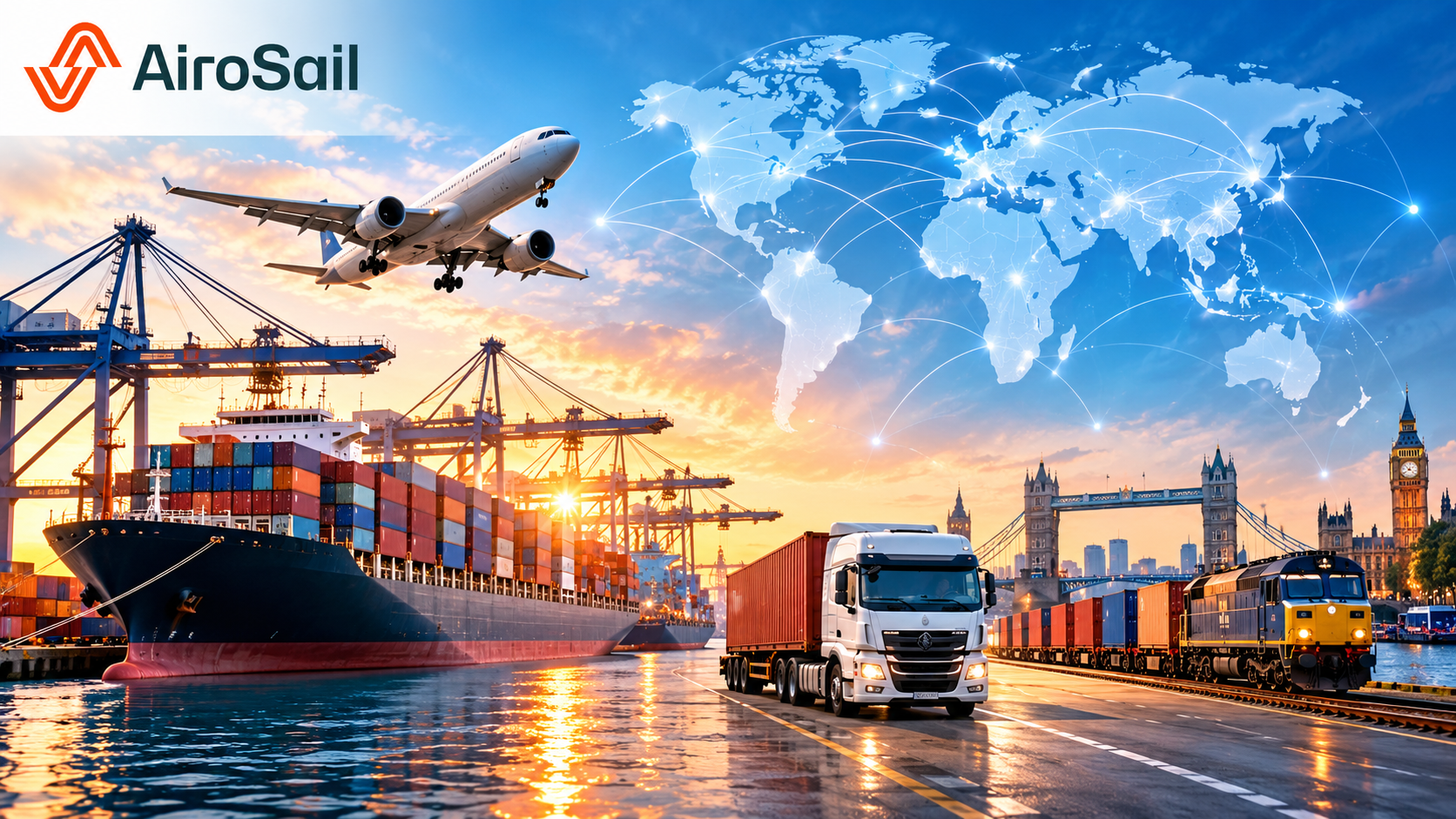
International trade creates significant opportunities for UK businesses, but moving commercial goods across borders involves far more than arranging transport. Importers and exporters must manage carriers, routes, documentation, customs procedures, cargo handling, delivery schedules and changing international requirements.
This is where freight forwarders UK play an important role. A professional freight forwarder coordinates different parts of the transportation process, helping businesses move goods between suppliers, warehouses, ports, airports and final destinations more efficiently.
Whether a company imports raw materials, exports manufactured products, or ships e-commerce orders internationally, the right logistics partner can simplify complex processes and provide greater visibility over shipments.
What Are Freight Forwarders?
A freight forwarder is a logistics specialist that arranges and coordinates the movement of goods from one location to another. Rather than necessarily operating every vehicle, vessel or aircraft themselves, freight forwarders work with carriers, customs professionals, warehouses, ports and other logistics providers.
In practical terms, a freight forwarder can act as a central point of coordination for an international shipment.
Depending on the shipment and service agreement, freight forwarding companies UK may assist with:
- Transport planning and carrier selection
- Route planning
- Booking cargo space
- Shipment documentation
- Cargo consolidation
- Warehousing and storage
- Customs-related coordination
- Cargo handling
- Shipment tracking
- Delivery scheduling
- Multimodal transportation
This coordination is particularly valuable when shipments cross multiple borders or involve several transportation providers.
Why International Import and Export Can Be Complex
International shipping UK involves numerous moving parts. A shipment may travel by road from a supplier to a port, by sea to another country, by road again to a distribution centre and finally to the customer’s premises.
At every stage, there can be different requirements and potential complications.
Common challenges include:
Multiple Transportation Providers
International cargo may require several carriers. Coordinating different companies, collection times and handover points can become difficult without a central logistics coordinator.
Import and Export Documentation
Commercial invoices, packing lists, transport documents, customs declarations and certificates may all be relevant depending on the shipment.
Errors or missing information can cause administrative problems and potentially delay the movement of goods.
Customs Requirements
Goods entering or leaving countries can be subject to customs procedures, duties, taxes, restrictions and documentation requirements. Requirements can also differ depending on the commodity and destination.
Changing International Requirements
International trade regulations and operational requirements can change. Businesses therefore need to ensure that their shipping processes and documentation remain appropriate for the markets they serve.
Unexpected Delays
Weather, congestion, capacity constraints, operational disruption and documentation issues can affect transportation schedules.
Professional freight forwarding services UK help businesses prepare for these variables and coordinate responses when problems occur.
How Freight Forwarders UK Simplify International Shipping
The main value of professional freight forwarding is coordination.
Instead of a business independently communicating with multiple carriers, warehouses and logistics providers, a freight forwarder can coordinate the different stages of the shipment.
1. Shipment Planning
A freight forwarder first considers the nature of the cargo, origin, destination, required delivery timeframe and transportation requirements.
This information helps determine an appropriate logistics plan.
For example, a business shipping large volumes of non-urgent goods may consider sea freight, while time-sensitive cargo may require air freight. Road transportation may be appropriate for domestic or European movements, while multimodal solutions can combine several transport methods.
2. Carrier Coordination
Freight forwarders work with transportation providers to arrange cargo movement.
This can include booking available capacity, coordinating collection and delivery schedules, and managing communication between different parties involved in the shipment.
3. Route Planning
The most suitable route depends on several factors, including destination, cargo characteristics, urgency, available services and cost considerations.
Experienced UK freight forwarders can assess available options and coordinate routes designed around the business’s requirements.
4. Cargo Consolidation
Where appropriate, smaller shipments may be consolidated with other compatible cargo. Consolidation can help businesses use transportation capacity more efficiently, although suitability depends on the cargo and service requirements.
5. Documentation Coordination
Freight forwarders can help businesses organise the documents needed for transportation and customs processes, reducing the risk of administrative oversights.
6. Warehousing and Delivery Coordination
Some freight logistics services also include temporary storage, cargo handling, order preparation and final-mile delivery arrangements.
This can be particularly useful for businesses that do not have extensive logistics infrastructure of their own.
7. Shipment Tracking
Modern logistics operations increasingly rely on shipment visibility. Tracking and status updates can help businesses understand where cargo is within the transportation process and plan receiving, inventory and customer fulfilment activities accordingly.
Managing Import and Export Documentation
Documentation is one of the most important aspects of international freight.
Depending on the shipment, businesses may need documents such as:
- Commercial invoices
- Packing lists
- Bills of lading
- Air waybills
- Certificates of origin
- Customs declarations
- Import or export licences where applicable
- Product-specific certificates or supporting documentation
The exact requirements depend on factors such as the goods, origin, destination, trading arrangements and applicable regulations.
Freight forwarders can help businesses understand which documents may be required and coordinate the information needed by carriers, customs representatives and other parties.
Accurate information is particularly important because incorrect descriptions, quantities, values or classifications can create avoidable complications.
Businesses should still retain responsibility for providing accurate commercial and product information and should obtain specialist advice where regulatory requirements are complex.
Supporting Customs Clearance
Customs clearance UK is an important part of international trade.
Freight forwarders can support the administrative and logistical side of customs processes by helping organise documentation, coordinating with customs brokers or agents where appropriate, and ensuring that shipment information is communicated to the relevant parties.
However, freight forwarding does not mean that every shipment will automatically clear customs without delay. Customs authorities may inspect cargo, request additional information or apply requirements based on the nature of the goods and applicable regulations.
Businesses should therefore work with experienced logistics providers while ensuring that their own commercial and regulatory information is accurate and complete.
Choosing the Right Transportation Method
Different types of cargo require different transportation solutions. Freight forwarders can help businesses compare available options based on factors such as urgency, shipment volume, cargo type, destination and budget.
Sea Freight UK
Sea freight UK services are commonly used for larger or heavier shipments, particularly when delivery speed is less critical than transportation capacity and overall logistics planning.
Containerised shipping can support international trade across long distances and is widely used for commercial cargo.
Air Freight UK
Air freight UK services are generally suited to shipments where speed is a major consideration. They can be useful for time-sensitive goods, high-value products, samples and urgent replenishment.
Air freight typically involves higher transportation costs than sea freight, making careful evaluation important.
Road Freight UK
Road freight UK services provide flexible transportation for domestic movements and certain international routes. Road transport can also form an important part of multimodal supply chains by connecting warehouses, ports, airports and customers.
Multimodal Transportation
Some shipments require a combination of sea, air, road or rail transportation.
A freight forwarder can coordinate these stages so that cargo moves through the supply chain according to a planned logistics schedule.
Improving Shipment Efficiency and Visibility
Good logistics management is not simply about moving cargo from point A to point B. Businesses also need information.
Shipment visibility can help companies:
- Prepare warehouses for incoming goods
- Plan inventory levels
- Coordinate customer deliveries
- Identify potential disruptions
- Communicate more accurately with customers
- Organise receiving teams
- Manage international orders more effectively
Having one logistics partner coordinating multiple transportation stages can also reduce the number of separate communications a business needs to manage.
For growing companies, this centralised approach can become particularly valuable as shipment volumes and international destinations increase.
Helping Businesses Manage International Shipping Risks
International logistics involves unavoidable risks, but effective planning can help businesses prepare for them.
Potential challenges include:
- Port congestion
- Weather disruption
- Transportation delays
- Documentation errors
- Cargo handling issues
- Capacity constraints
- Route changes
- Customs queries
- Communication gaps between logistics providers
Experienced freight forwarding companies UK can help identify potential issues during shipment planning and coordinate alternative arrangements where feasible.
They can also provide communication between carriers and customers when circumstances change.
This does not eliminate international shipping risks, but it can make them easier to manage through structured planning and professional coordination.
Freight Forwarders UK and Supply Chain Management
Freight forwarding is closely connected to broader supply chain management.
For importers, reliable cargo movement affects inventory availability. For exporters, transportation performance can influence customer service and international market access.
Businesses expanding internationally may also need to coordinate:
- Overseas suppliers
- Distribution centres
- Manufacturing facilities
- Retail locations
- E-commerce fulfilment
- Inventory replenishment
- Customer deliveries
A capable logistics provider can become part of this wider supply chain network, helping coordinate international movements while allowing the business to focus on its core operations.
For SMEs in particular, outsourcing elements of logistics can provide access to transportation networks and operational expertise without requiring them to build an extensive in-house freight department.
Benefits for UK Importers and Exporters
Working with experienced freight forwarders UK can provide several practical advantages.
Time Savings
A forwarder can coordinate multiple shipment activities, reducing the amount of time businesses spend managing individual logistics providers.
Better Coordination
Having a central logistics contact can make communication between carriers, warehouses, customs representatives and customers more straightforward.
Simplified Documentation
Freight professionals can help businesses organise shipping documentation and identify information that may be required for a particular movement.
Customs Support
Forwarders can coordinate customs-related processes and work with appropriate customs professionals where necessary.
Access to Multiple Transport Options
Businesses can evaluate sea, air, road and multimodal transportation according to their requirements.
Improved Shipment Visibility
Tracking and regular communication can provide greater awareness of shipment progress.
Greater Flexibility
Freight forwarding services can be adapted to different shipment sizes, destinations, schedules and supply chain requirements.
Support for International Expansion
As businesses enter new markets, logistics coordination becomes increasingly important. A freight forwarder can help companies establish practical transportation arrangements for international trade.
How to Choose a Reliable Freight Forwarder in the UK
Selecting a logistics provider should involve more than comparing headline prices. Businesses should assess the provider’s capabilities against their actual shipping requirements.
Consider the following factors:
Industry Experience
Look for a provider familiar with your cargo type, destinations and industry requirements.
International Network
A strong network of carriers, agents and logistics partners can be useful when managing international movements.
Range of Freight Services
Check whether the company can provide the services you need, such as sea freight, air freight, road freight, warehousing and multimodal transportation.
Customs Knowledge
International shipments can involve detailed customs requirements. Ask about the provider’s experience in supporting customs processes relevant to your trade lanes and products.
Communication
Clear communication is essential when shipments involve multiple countries and service providers.
Tracking Capabilities
Ask how shipment updates are provided and whether you will have access to tracking information.
Transparent Pricing
Understand what is included in the quoted price and ask about potential additional charges, including handling, storage, customs-related costs and destination charges where relevant.
Customer Support
International shipments can operate outside normal business hours, so consider how the provider handles urgent queries and unexpected disruptions.
Service Flexibility
Your logistics requirements may change as your business grows. A forwarder should be able to accommodate changing volumes, destinations and transportation needs where possible.
Reputation and Credentials
Check relevant industry credentials, customer feedback, experience and business history before selecting a logistics partner.
Frequently Asked Questions
What does a freight forwarder do in the UK?
A freight forwarder coordinates the transportation of goods between origins and destinations. Services can include carrier booking, route planning, documentation, customs coordination, cargo handling, warehousing, tracking and delivery arrangements.
How can freight forwarders help with international imports and exports?
They coordinate multiple aspects of international shipping, including transportation, documentation, cargo handling and communication between carriers and other logistics providers. This can simplify the process for importers and exporters.
Do UK freight forwarders handle customs clearance?
Many freight forwarders can support or coordinate customs-related processes, either directly or through customs agents and brokers. The exact service depends on the provider and shipment requirements. Customs authorities retain responsibility for customs decisions and controls.
What types of freight can UK freight forwarders manage?
Depending on the provider, freight forwarders can arrange sea freight, air freight, road freight and multimodal transportation. Some also specialise in particular cargo types, industries or international trade routes.
What is the difference between a freight forwarder and a shipping company?
A shipping company generally provides a specific transportation service, while a freight forwarder coordinates logistics across one or more carriers and transportation methods. A forwarder may therefore arrange shipping without operating the vessel, aircraft or truck itself.
How much do freight forwarding services in the UK cost?
Costs vary according to cargo volume, weight, dimensions, origin, destination, transportation method, service requirements and additional charges. Businesses should request detailed quotations that clearly identify included and excluded services.
Can freight forwarders arrange international door-to-door delivery?
Many freight forwarders can arrange door-to-door transportation by coordinating collection, international transit, customs-related processes and final delivery. The exact service depends on the provider, destination and shipment requirements.
How do businesses choose the right freight forwarder in the UK?
Businesses should compare experience, international coverage, transportation options, customs knowledge, communication, tracking, pricing transparency, customer service and flexibility. The best fit depends on the company’s specific cargo and trade requirements.
Conclusion
International trade can involve complex transportation networks, documentation requirements, customs procedures and multiple logistics providers. For UK importers and exporters, managing all these elements independently can consume valuable time and create additional administrative challenges.
Experienced freight forwarders UK can simplify this process by coordinating transportation, documentation, cargo handling, customs-related support, tracking and delivery arrangements. Whether a business requires sea freight UK,s air freight, road transportation or a multimodal solution, professional freight forwarding can provide a more structured approach to international logistics.
As companies expand into overseas markets, reliable logistics becomes an increasingly important part of business operations. Choosing a freight forwarding partner with appropriate experience, international connections, clear communication and flexible services can help businesses manage global trade more effectively.